
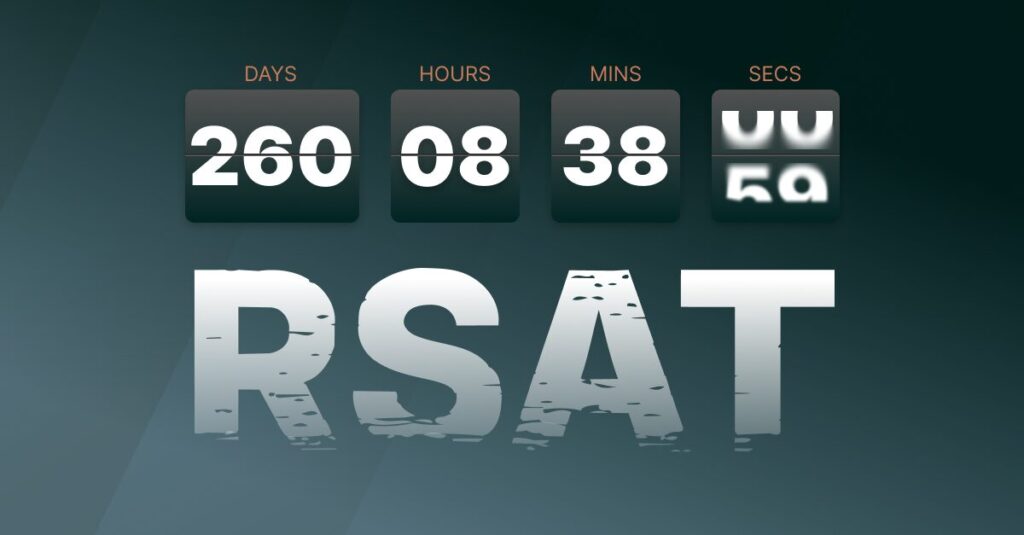
RSAT support ends after May 15, 2027. Playwright can automate Dynamics 365, but that does not automatically make raw Playwright the right replacement for everything RSAT provided.
For some teams, Playwright will be an excellent foundation. For others, replacing hundreds of RSAT tests with code could turn a migration into a software-engineering project. The real decision is what should replace the testing capability around those clicks.
Much of the RSAT migration discussion naturally focuses on no-code replacements because RSAT enabled functional users to build and run regression tests without becoming automation developers. But the end of RSAT is also an opportunity to ask a broader question: should part of your future Dynamics 365 automation strategy move to Playwright, while preserving the business-process coverage you have already built?
If you’re already invested in RSAT, you don’t need to rebuild your regression suite from zero. Leapwork provides a RSAT migration path into Leapwork Flow, allowing you to preserve existing business process coverage while progressively modernizing your dynamics testing strategy.
Is Microsoft replacing RSAT with Playwright?
Microsoft hasn’t suggested any universal replacement for RSAT. Microsoft confirms that RSAT will not be supported after May 15, 2027 and lists multiple Dynamics 365 automation options. Customers still need to choose based on their applications, skills and existing assets.
Why is Dynamics 365 still difficult to automate?
RSAT was closely connected to the Dynamics ecosystem. Functional users could record business processes with Task Recorder, parameterize test data and execute regression tests without becoming automation developers.
Its limitations became familiar in customized estates: dynamic controls, complex grids, asynchronous dialogs, embedded applications, test-data dependencies and cross-system workflows.
Playwright improves many browser-level problems. Its locators, automatic waiting, tracing, parallel execution and CI/CD support make it a strong automation engine. But Playwright understands browsers; it does not understand your Dynamics business processes.
Where does the Leapwork Continuous Validation Platform fit?
With Leapwork entering the picture, the choice we have been discussing becomes more interesting than simply ‘RSAT or Playwright.’
| Approach | Existing RSAT tests | New Dynamics automation | Best suited for |
| Playwright | Rewrite/conversion required | Yes | Engineering-led browser/API automation |
| Leapwork Play | No direct RSAT migration today | Yes, Playwright-based | Modern Dynamics web automation |
| Leapwork Flow | RSAT migration path | Yes | Existing RSAT + complete business processes |
| Leapwork GO | N/A | Performance | Dynamics/API load and performance |
Leapwork Play is for teams that want Playwright as the foundation. Existing Playwright scripts can be brought into a shared workspace where teams create, run and manage web tests with AI assistance. The goal is to keep Playwright’s strengths without assembling every surrounding capability from scratch.
Leapwork Flow addresses a different problem. When a test represents an entire business process spanning Dynamics 365, Power Platform and connected enterprise systems, Flow provides visual, cross-application automation. It also provides a migration path for existing RSAT assets.
Functional regression is only part of the Dynamics quality problem. Leapwork Go extends the same validation strategy into performance, helping teams understand whether critical Dynamics 365 transactions and APIs remain responsive and reliable as load increases.
What happens to your existing RSAT tests?
The fate of existing RSAT tests may be the most important part of the migration decision. A large RSAT estate is not simply a collection of scripts. It represents years of business-process knowledge, test data, expected outcomes and regression coverage.
You do not have to rebuild all of that from scratch in a migration. Existing RSAT tests can be migrated to Leapwork Flow using the Leapwork RSAT migration tool. This provides a path to preserve and continue maintaining existing Dynamics automation while moving away from RSAT before support ends.
The migration is also a good opportunity to review the estate rather than moving everything blindly. Retire tests that no longer protect important processes, redesign tests that need improvement, and migrate the valuable RSAT coverage into Flow.
For new Dynamics web automation, teams can separately evaluate Leapwork Play where they want to modernize around Playwright.
In other words… Existing RSAT -> Migrate, Preserve and Enhance in Leapwork Flow, New Dynamics 365 web automation -> Build with Leapwork Play, Cross system E2E process -> Leapwork Flow, Performance -> Leapwork Go
When should you start planning your RSAT migration?
With RSAT support ending after May 15, 2027, migration should be treated as a planning decision now rather than a 2027 technology project. Large RSAT estates may need time to inventory coverage, retire redundant tests, migrate valuable assets, remediate difficult scenarios, validate the new automation and run it in parallel before the deadline.
The budget cycle matters too. If migration requires new tooling, implementation support, training or a period where existing and new automation run side by side, those costs need to be planned before the support deadline becomes urgent.
| Question | What to consider |
| How large is our RSAT estate? | Number of tests, critical business processes and current maintenance effort. |
| What should we preserve? | High-value business processes, expected outcomes, test data and regression coverage. |
| What should we retire? | Duplicated, obsolete or low-value tests that do not protect important processes. |
| What belongs in Playwright? | Browser-focused Dynamics 365 web automation where Playwright is the right foundation. |
| What belongs in Flow? | Existing RSAT coverage that needs to be preserved and complete cross-application business processes. |
| What needs funding? | Migration tooling, licenses, implementation support, training and any period of parallel operation. |
A practical first step is to inventory the existing RSAT estate and classify what must be preserved, what can be retired, what should move toward browser automation, and what represents a wider end-to-end business process.
So, what should replace RSAT?
There is no single answer to what should replace RSAT.
Raw Playwright can suit engineering-led teams willing to own the framework. The larger question is how you will handle customizations, Dynamics-specific abstractions, data, maintenance, governance and workflows beyond the browser. Keep in mind that there are hidden costs to maintaining a DIY Playwright framework.
Play fits teams that want Playwright plus enterprise governance, evidence and trust. Play is designed for teams that want to modernize Dynamics 365 browser automation around Playwright without having to build and operate the entire Playwright framework themselves. It is most relevant where the future automation strategy is Playwright-based but QA teams still need scalable execution, maintenance, diagnostics, evidence and collaboration.
Flow fits when automation must follow complete business processes across Dynamics 365 and connected systems. Flow is best suited when the test represents a complete business process rather than only a browser interaction. Dynamics processes often cross APIs, desktop applications, files, legacy systems and other enterprise applications. Flow is designed to validate that end-to-end journey and also provides a path for migrating existing RSAT assets.
Go can be used to validate the performance and scalability of Dynamics 365 scenarios and APIs. This is useful for understanding how critical transactions behave under load, identifying bottlenecks and validating performance before changes or releases reach production.
Fortiunately, teams do not need to choose between Leapwork Play, Flow, and Go; all three address different parts of the Dynamics 365 quality problem.
- Play can provide a modern Playwright-based approach to web regression testing.
- Flow can validate complete cross-application business processes.
- Go can validate performance and scalability.
For larger Dynamics estates, the right strategy may use more than one depending on the type of risk being tested. You can also use credits across the entire platform.
With RSAT support ending in May 2027, teams should address their RSAT migration needs now, while there is time to test difficult scenarios, preserve assets, and budget for migration. Our team of experts can help you figure out what can be preserved, what should be retired or redesigned, and how to move your existing RSAT coverage into Leapwork before Microsoft support ends.