

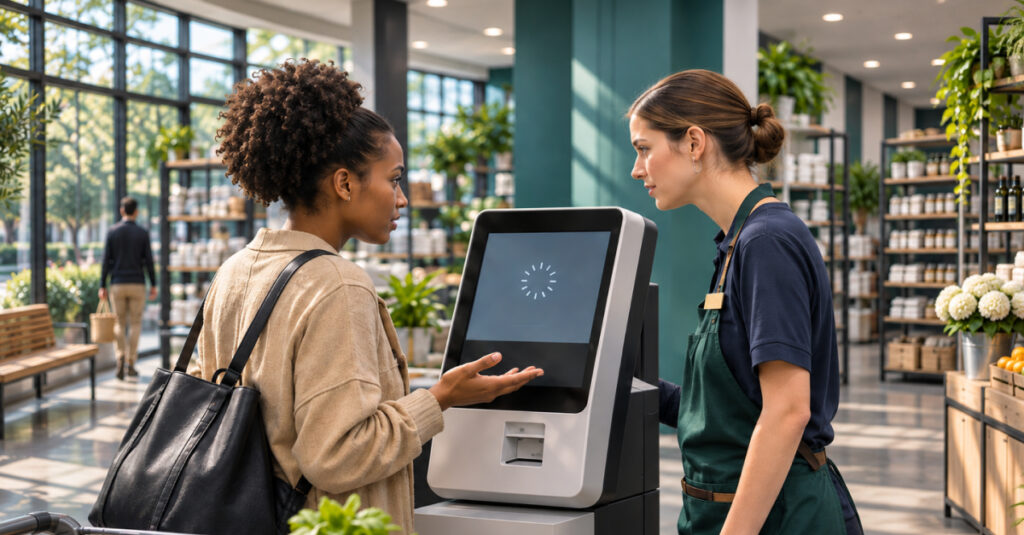
Sometimes, the smallest change to software code, a payment connection, or product data can trigger a variety of disruptions on an ecommerce or retailer’s website. One online retailer experienced this in March 2026 when over 22,000 shoppers reported that they couldn’t check out, view product prices, or access account information for several hours on the retailer’s site. After fixing the issue, the retailer said in a statement that the cause was related to a software code deployment.
The retailer’s shopping outage is a cautionary reminder that retail teams can never underestimate the value of release readiness, regardless of the release size and the time of year. For retailers, readiness means validating the journeys on which shoppers and employees depend, along with the connected systems that support them. It also means examining how AI adds new entry points and handoffs to shopper journeys while extending them into new discovery, service, and decision-making touchpoints that need validation too.
Below, we examine how leaders can prioritize retail journeys, prepare for everyday change and demand, account for the ways in which AI has changed shopper journeys, and build evidence for release decisions.
Retail readiness starts with the journeys that matter most to customers and the business
A shopper’s journey can run from finding a product and applying an offer to checking out and receiving an order confirmation. Behind that path, ecommerce, payment, inventory, CRM, store, and fulfillment systems facilitate products and prices appearing, apply offers, authorize payment, allocate stock, route orders, and send updates. Prioritizing shopper journeys helps leaders direct attention and investment toward the steps that shape whether customers can buy and receive what they expect.
Some of the most essential concerns for determining the importance of a journey include a retailer’s product availability, cost per order, delivery density, and dependable service. Knowing the ways in which these factors connect to each other is essential when determining shopper journey importance.
So, mapping paths such as product discovery to checkout or order placement to delivery helps leaders identify which systems and teams need to work together. The exercise also shows where vulnerabilities could expose the journey path to unexpected change.
| Leapwork helps retail organizations continuously validate the customer journey across the applications and services behind product discovery, checkout, fulfilment, and every release. See how we do it. |
Everyday changes and traffic surges put journeys under pressure
Routine changes can dramatically affect the shopping experience, as a software release can affect several customer-facing steps at once. The fact that a code deployment caused the large online retailer’s product pages and prices, account access, and checkout issues underscores the ripple effect an everyday change can have across a shopper’s journey.
Traffic adds another source of pressure to retail site resilience. In a 2026 Network Solutions survey of 507 U.S. business website owners and managers, 64% of the 307 respondents whose sites had failed said the cause was too much traffic. These surges aren’t limited to peak events like Black Friday or other holiday sales; routine updates to promotions, payments, inventory, and store workflows can put those journeys under pressure.
Each update to a retail estate can add or alter dependencies among systems. Those connections shape how sensitive a journey is to everyday change and how resilient it is when a step fails. Mapping those connections out gives teams a clear basis for deciding what to validate before a change reaches shoppers and potentially alters their journey.
AI is reshaping shopper journeys and retail readiness
AI is also altering dramatically altering shopper journeys: traffic from generative AI sources to U.S. retail sites rose 4,700% year over year by July 2025, according to an Adobe report. Shoppers are using AI to research products, get recommendations, and find deals, so a journey may begin in an AI assistant and continue through a retailer’s site, cart, and checkout. That creates new traffic patterns and connections for retail teams to validate.
Shoppers’ confidence in AI also depends on what the tool is doing. For instance, a 2026 Sinch survey found that 76% of U.S. shoppers were confident AI could handle order tracking, while 55% expressed confidence in AI handling payment and billing requests. Meanwhile, 82% expect a brand to provide a refund or credit if its AI makes a promise it fails to keep, per a Forethought survey.
These AI touchpoints elevate the need for retailers to ensure that AI gives accurate product and order information, follows through on its promises, and smoothly hands sensitive payment or account questions to a person. AI may extend the journeys and dependencies that teams need to examine before shipping a release, but it doesn’t change the proof leaders need to be confident that the release won’t adversely affect anything.
Release evidence should connect technology changes to retail outcomes
No matter the scope and shape of journey validation at hand, leaders need clear evidence that critical customer steps work and that the services behind them can handle relevant demand.
QA and testing teams should examine changes and updates across the enterprise estate, tracing how each one could affect connected applications, APIs, data, and customer journeys. For instance, a promotion update might call for checks across the offer, cart, and checkout price, while a fulfillment change might require checks for inventory, order routing, picking, and customer updates.
From there, teams can run functional, API, and performance checks and review business measures. Together, these release-validation activities show whether journeys work, handle demand, and support intended service and financial outcomes. Teams can then assess results alongside measures such as cancellations, delivery speed, or fulfillment cost. That evidence gives leaders a clearer basis for release and investment decisions.
Leapwork brings retail journey validation workflows together
A shared validation approach can help teams carry this work across applications and disciplines. The Leapwork Continuous Validation Platform provides a governed foundation for validating retail workflows across applications and testing disciplines. Its three complementary components (Flow, Play, and Go) support connected shopper and employee journeys, from digital channels through enterprise systems and fulfillment operations:
- Flow provides visual, no-code functional and regression testing across web, desktop, Citrix, mainframe, and packaged applications such as SAP and Dynamics 365.
- Play adds enterprise governance, reuse, and requirement-linked evidence for engineering teams working with Playwright. Its execution is deterministic, with no model call at runtime.
- Go provides HTTP load and API testing, with real-time visibility into throughput, latency, errors, and resource use.
Business and QA teams can build visual Flow automations, engineering teams can work with Playwright in Play, and leaders can govern validation and review release evidence across the platform. Retailers can use these capabilities to check everyday changes and prepare customer journeys for major promotional events.
Frequently Asked Questions
What should retail technology leaders validate before a release?
Retail technology leaders should first identify the journeys that affect customer experience, product availability, service reliability, and fulfillment cost. They should then map the systems involved, and QA and testing teams should validate the steps affected by the release’s changes.
How does year-round validation help retailers manage change and demand?
Year-round validation helps teams check the journeys affected by routine updates and prepare services for traffic surges throughout the year. Results can be reviewed alongside measures such as cancellations and delivery speed.
How can Leapwork support retail journey validation?
Leapwork’s Continuous Validation Platform brings together Flow for visual functional and regression testing, Play for governed Playwright workflows, and Go for HTTP load and API testing.